How a Journey Back to Kenya Came Full Circle
By Daniel Moore

They say the red clay of Africa gets under your skin and always brings you back. That may be why Kenya holds a special place in my heart.
A month after graduating from university with an international business degree, I was on a plane with no experience, money, or contacts. I was brave and stupid, although I'm not sure which trait I had more of.
Fortunately, people welcomed me in, helping me gain life experiences and a nuanced understanding of the world. I learned that there are no simple solutions to poverty, that having more is not necessarily better, but that people are not necessarily happy because of their poverty either.
Little did I know that years later, after launching my pickleball career, I would return to introduce the sport to the people of Kenya. Later, I would realize my dream of taking Americans on a trip to play with Kenyans.
It's been a full-circle, exciting journey of returning each time to see the sport grow and how it changes people's lives.
Here's the story behind the first safari pickleball trip.
A FIRST CHAPTER IN KENYA
I got a job in Kenya selling fuel-efficient cookstoves.
In rural Africa, where electricity is scarce, most people cook over an open fire, contributing to deforestation, carbon emissions, and excessive smoke inhalation, with various environmental and health consequences.
The women who collect or buy firewood spend time or money acquiring the fuel, leaving little resources for essentials such as food or their children's education. By using a fuel-efficient cookstove, they reduce fuel usage by up to half, gaining time or financial leeway to use more productively.
Although entirely unrelated to pickleball, my first job in social enterprise sparked my international interest and desire to make a positive change.
While I gained solid life experience in Kenya, I was also young and naive. I expected to arrive in Africa and immediately make meaningful change, which was optimistic but far from reality. I realized that the world, especially Africa, is complex, and to make a lasting impact, I needed to dedicate decades of my life to the continent.
Unwilling to do so, I packed my bags and returned to America after completing an overland journey from Nairobi to Cape Town. Border troubles, quirky locals, haunting poverty, stunning scenery like Victoria Falls, and crowded buses where I was the only white guy were all part of my 100 hours of bus rides.
But that is a story for another day.
PICKLEBALL TAKES OVER
Returning to my parents' house in Colorado while I contemplated the next step, I had the fortuitous timing of starting pickleball at the beginning of its rapid expansion. Fresh off my college tennis career, I quickly won a few national singles titles and a year later, reached the apex of the sport in doubles.
However, no one played pickleball full-time like today, so I decided to return to Japan, my childhood home, to pursue a career in the tourism industry. Since pickleball did not exist in Japan at the time, I decided to introduce and grow the sport while working. For five years, I traveled back and forth, training and competing in tournaments in the US, while working and developing pickleball in Japan.
But Kenya remained at the back of my mind.
BRINGING PICKLEBALL TO KENYA
In 2018, I finally made time to return. Realizing that no one had yet introduced pickleball, I saw an opportunity.
The tennis club where I practiced while living in Nairobi graciously accepted the opportunity to host a pickleball introduction event, giving this sport with a funny name a chance. They invited several tennis coaches and players from around the city, some of whom enjoyed the experience so much that they wanted to continue.
They formed their own club, and pickleball was born in Kenya.
FROM DREAM TO SAFARI
Knowing I wanted to bring Pickleball Trips customers, I returned in 2019 to research locations for a tour. What would be cooler than playing pickleball and going on safari?
We had already planned and sold the trip when the COVID-19 pandemic occurred. It took three years to relaunch our company, and almost five years to successfully run the Pickleball Safari Trip in Kenya.
A huge thank you to all the customers who requested the trip and then applied the necessary pressure to make it happen. It was a pivotal experience to see the sport thriving with dedicated pickleball courts in Nairobi, and the pure joy in the eyes of local players.
Furthermore, it was uniquely satisfying to see Americans interact with local players, learn about Kenyan culture, and expand their horizons by joining us in Africa. And of course, going on safari is a once-in-a-lifetime bucket list experience that I recommend to everyone.
PICKLEBALL’S UNIVERSAL LANGUAGE
To this day, introducing pickleball to two countries is one of my proudest accomplishments.
When I see people from around the world playing together, it makes it all worthwhile. The more I travel and play globally, the more I am reminded that pickleball is a universal language. It has the power to bridge continents, transcend language, and perhaps even bring diplomacy and peace to a troubled world.
At Pickleball Trips, we want to make the world of pickleball easily accessible for our customers.
Here’s how the adventure unfolded, day by day:
DAY 1 – REST YOUR WEARY BONES
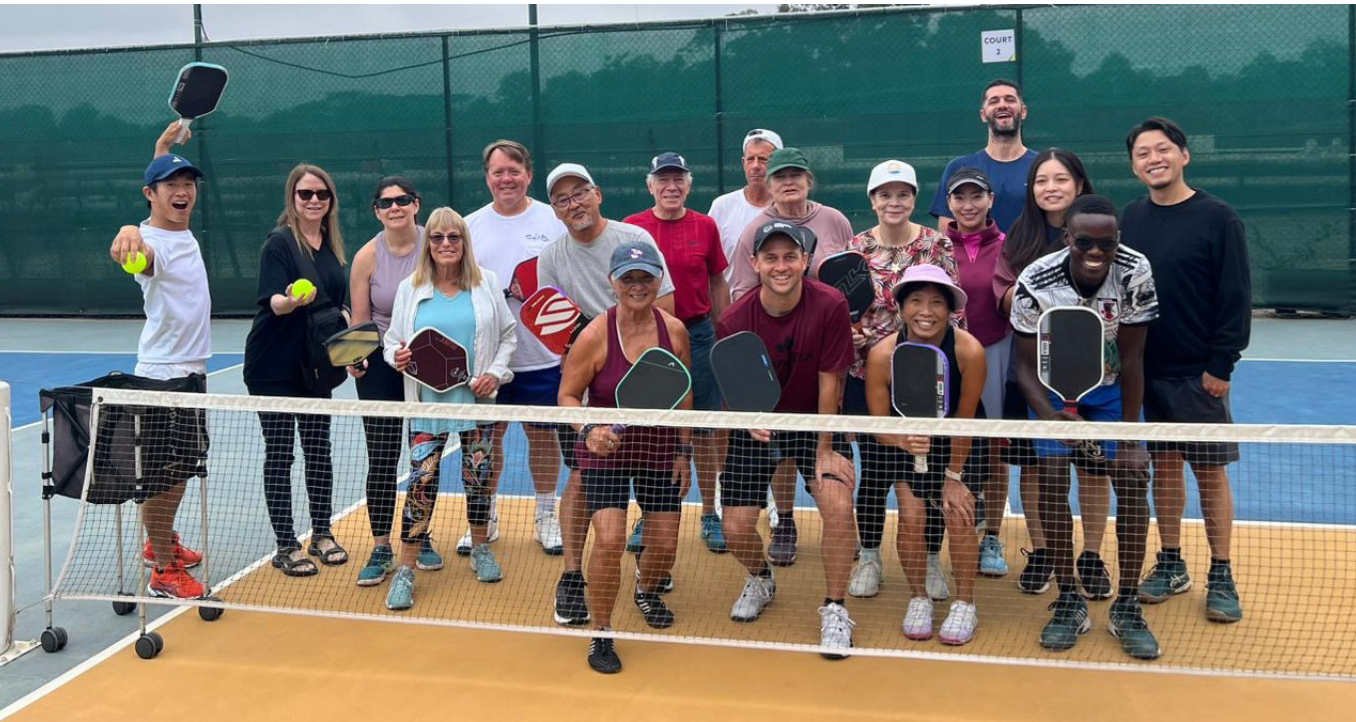
After arrival, we have a group dinner and provide time to rest after the long journey. Unfortunately, Kenya is almost precisely the opposite side of the world from Hawaii. We recommend arriving a day or two early to acclimate to jet lag and recuperate.
DAY 2 – ALL YOU CAN PICKLE
Stretch your legs and play as much pickleball as possible. In the morning, we offer a Pickleball Trips clinic led by our high-quality pickleball instructors. After free time for lunch, we invite local players to play recreational games. It's a relaxed environment where everyone mixes in, plays as much as they want, and socializes.
DAY 3 – WILDLIFE
On our first non-pickleball day, in the morning, we visit the Sheldrick Wildlife Trust in Nairobi National Park to check out the elephant orphanage. Here, they rehabilitate orphaned elephants and eventually reintroduce them into the wild. There is even an opportunity to adopt an orphaned elephant.
After lunch, we visit the Giraffe Center, where endangered Rothschild giraffes breed and are reintroduced into the world. Getting licked while feeding a giraffe up close is a truly wild experience.

DAY 4 – PICKLEBALL, TEA, AND COFFEE
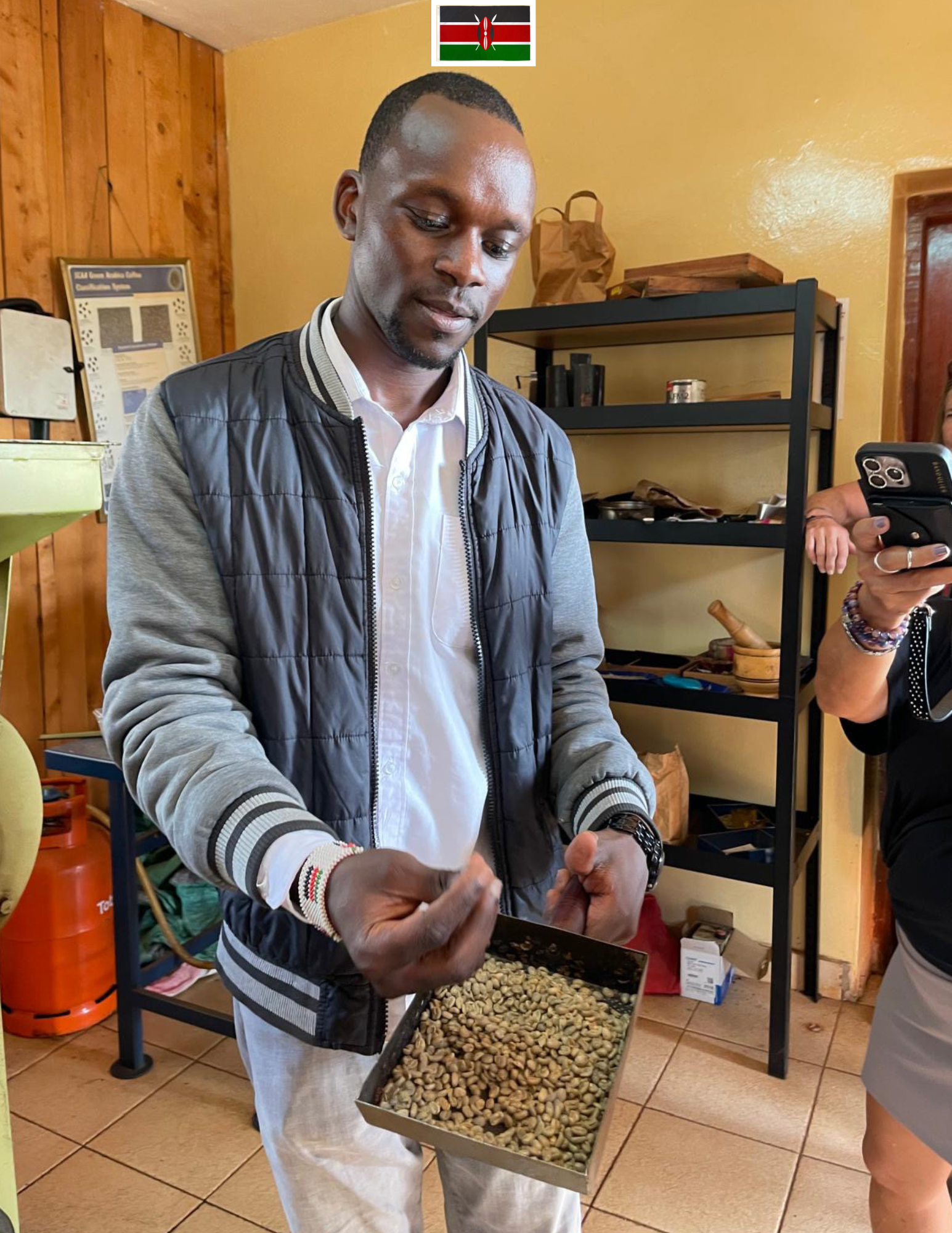
The morning features our second Pickleball Trips clinic. The rest of the day, we explore Kenya's principal agricultural exports. First, we set off for Fig & Olive, a farm-to-table restaurant in a tea plantation. We take a tour of the plantation and partake in brunch on site. Next up is the All Seasons Coffee Farm. This is an active coffee plantation where we learn about the process from growing to drying, roasting, and packaging. All Seasons Coffee is only available in Kenya, making it a great place to purchase souvenirs not found anywhere else. Dinner is in a restaurant near the coffee farm.
DAY 5 – PICKLEBALL, KAREN, AND CARNIVORE
After another Pickleball Trips clinic, we depart for Karen, an area of Nairobi made famous by the memoir Out of Africa by Karen Blixen. She was an entrepreneur, artist, writer, and leader, as well as one of the most prominent women in British East Africa. Her house, now a museum, is a relic of Kenya's colonial era. After visiting the museum, it's time to gorge ourselves at the famous Carnivore restaurant. In the past, the offerings included rarities such as zebra, wildebeest, and giraffe. Thankfully, game meat has been made illegal, and now the most uncommon meats include crocodile and ostrich.
DAY 6 – NAIROBI TO MASAI MARA
It's time for the safari. Day 1 is mostly travel, though, as the drive from Nairobi to Masai Mara Game Reserve takes around 6 hours with rest stops. En route, we pass by the Great Rift Valley Escarpment and observe how people live in rural Kenyan towns. Arriving at the lodge in the Mara, we check in, enjoy lunch, and freshen up before departing on the first evening game drive.
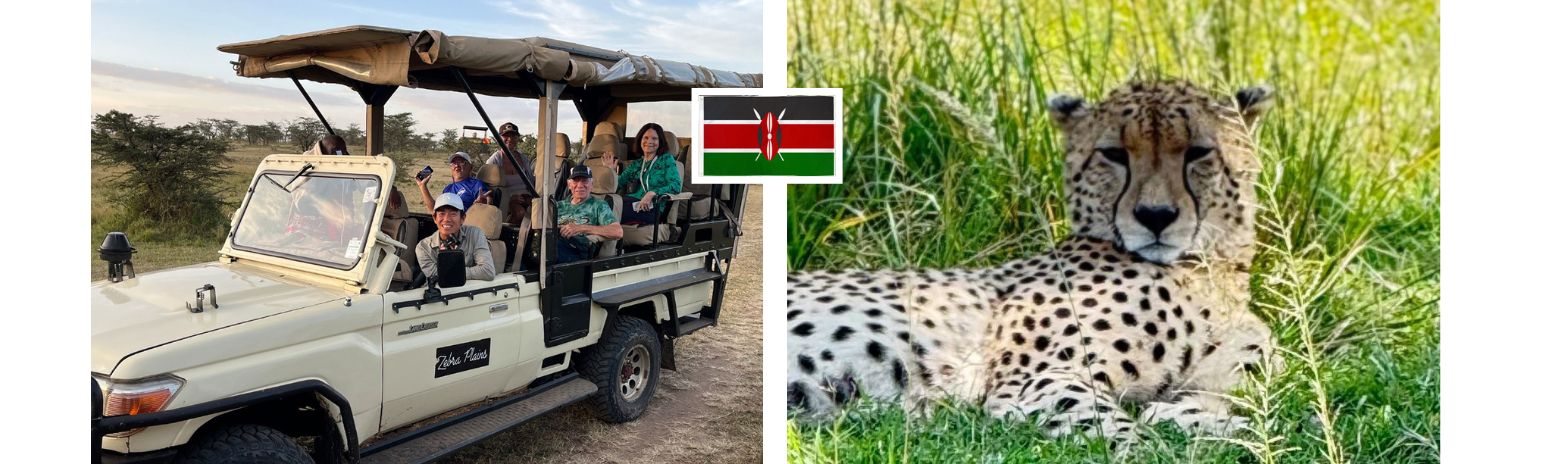
DAYS 7–8 – SAFARI
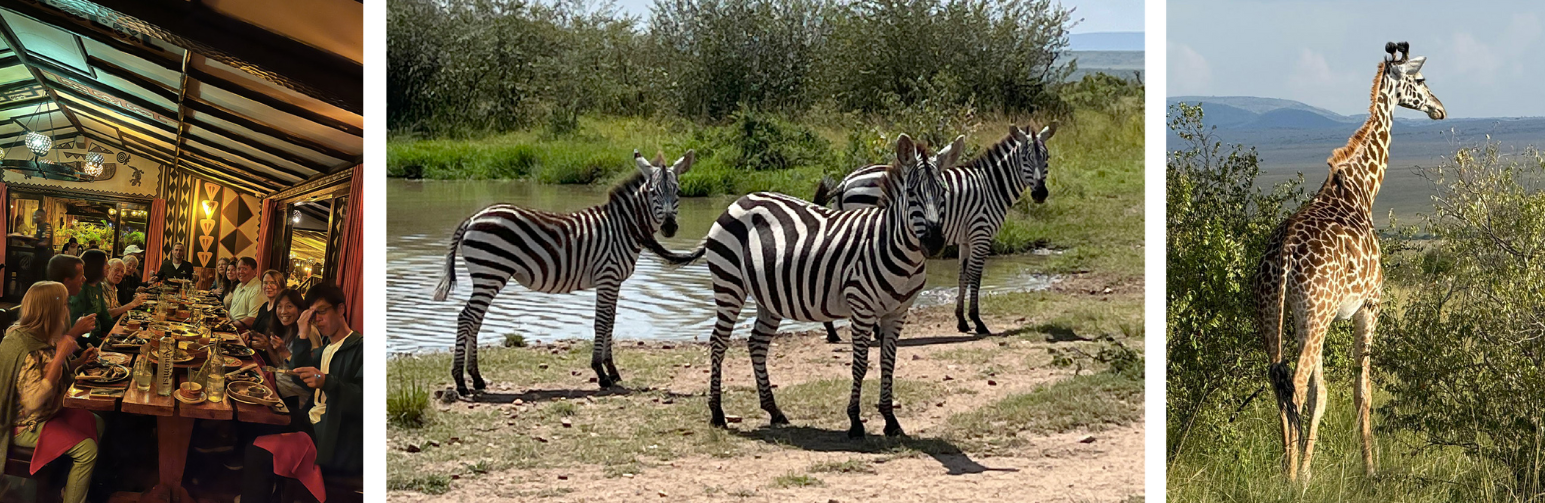
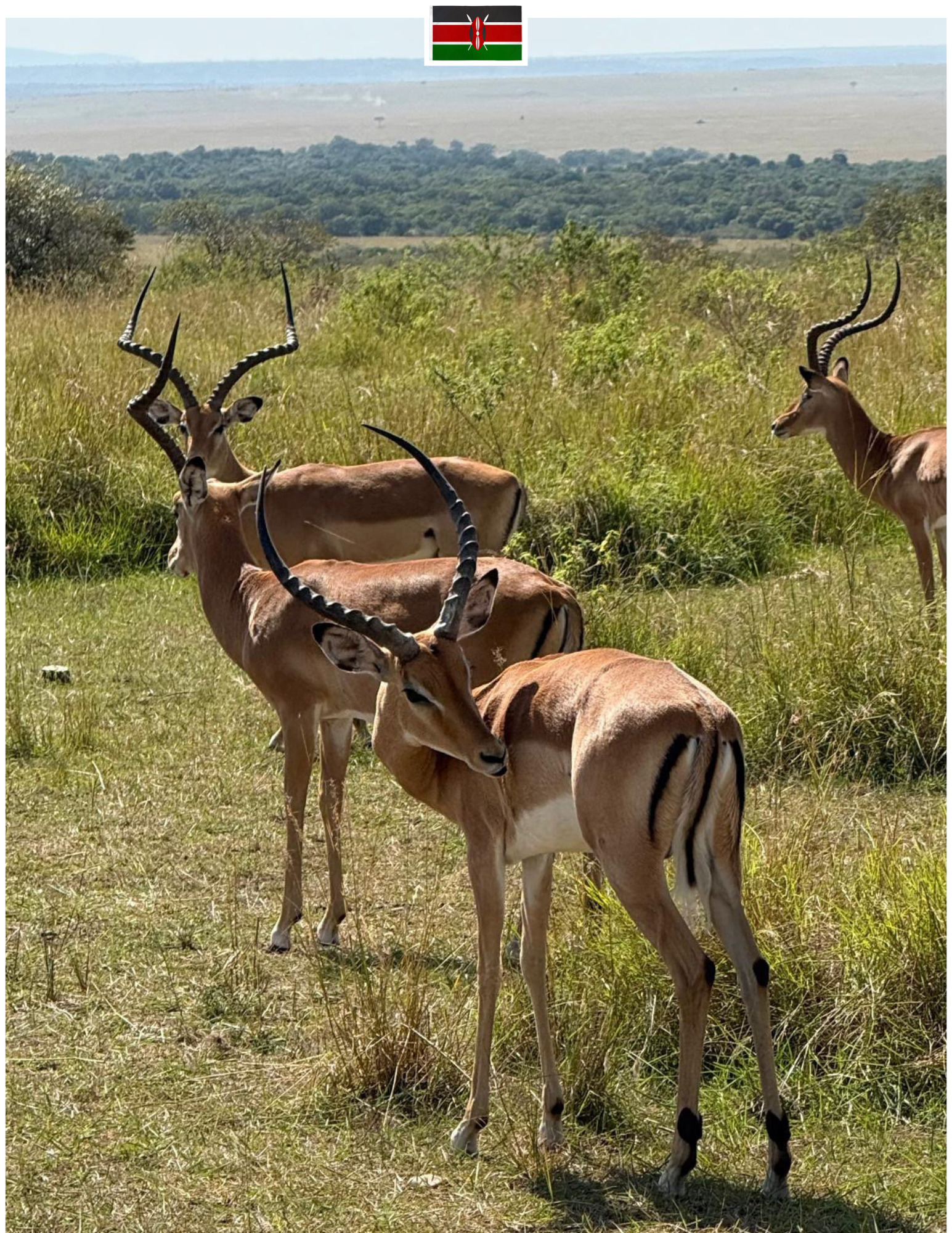
On these days, it's all about exploring the park in greater depth and spotting the animals. Typically, we depart around 6:00 AM for a long morning game drive, which lasts until lunchtime. We bring a packed breakfast on the Land Cruisers and take a scenic rest to enjoy the meal. We search for the Big 5 (lion, elephant, buffalo, leopard, rhino), as well as classic savannah wildlife such as cheetah, hyena, zebra, hippo, giraffe, gazelle, warthog, ostrich, and more. Being on the wide-open plains with nothing between you and the animals is a primitive experience that makes you realize the power of nature and the incredible raw power and abilities of these animals.
DAY 9 – FLY TO NAIROBI
We return to Nairobi by plane today to save the six-hour drive. There is free time in the afternoon to rest up, do laundry, or play recreational pickleball.
DAY 10 – FINAL PICKLEBALL
This morning is the final Pickleball Trips clinic. In the afternoon, you have the opportunity to either play again with local players or visit a local public school that has built a pickleball court. If you bring paddles to give away, this is a good place to do it. Our farewell dinner is in an elegant former British residence with a lovely manicured garden. The trip always goes by faster than you expect!
DAY 11 – DEPARTURE
Pickleball Trips will help you organize a taxi to the airport and your onward destination.

About the Author: Daniel Moore is the founder of Pickleball Trips, Active Travel Japan, the Onsen Pickleball Camp, coaching both professional and recreational players. A pioneer of pickleball in Japan, Daniel has coached around the world, played professionally, and is passionate about connecting international players with rural Japan. He currently manages AirBnBs in Nagano, leads outdoor cultural tours, and runs group pickleball tours.
Want to Join? Get a group of 7–9 friends together and email pickleballdaniel@gmail.com to discuss availability and pricing.